
Faster tools for developers, a new generation of OpenAI models and practical lessons from switching models in a production agent.
TypeScript 7, rewritten in Go, makes builds 8 to 12 times faster
Microsoft released TypeScript 7, a native version of the compiler written in Go that keeps the original's structure and logic to preserve compatibility. With native code and multithreading, full builds are typically 8 to 12 times faster. Editors benefit too: opening projects, finding references, auto-completion and diagnostics take a fraction of the time, with support through the LSP protocol in editors such as VS Code, Visual Studio and WebStorm.
In large projects, faster builds and checks shorten the cycle of every change, for people and for coding agents. Upgrading is usually simple, but test the pipeline and the tools that depend on the compiler API.
How Dexpert helps: Web DevelopmentSources
- Microsoft TypeScript Blog: Announcing TypeScript 7.0
OpenAI launches the GPT-5.6 family, with the Sol, Terra and Luna models
OpenAI released the GPT-5.6 family: Sol, the flagship, Terra, balanced for everyday work, and Luna, the most cost-efficient. According to the company, Sol posts frontier results in coding, knowledge work and science with fewer tokens, and gained ultra mode, which coordinates several agents in parallel for complex tasks. OpenAI says Terra and Luna beat competing frontier models at a fraction of the cost.
Having three tiers in the same family makes it easy to use the cheapest model for simple tasks and the strongest only where it makes a difference. Splitting tasks by complexity can cut the AI bill considerably.
How Dexpert helps: Artificial Intelligence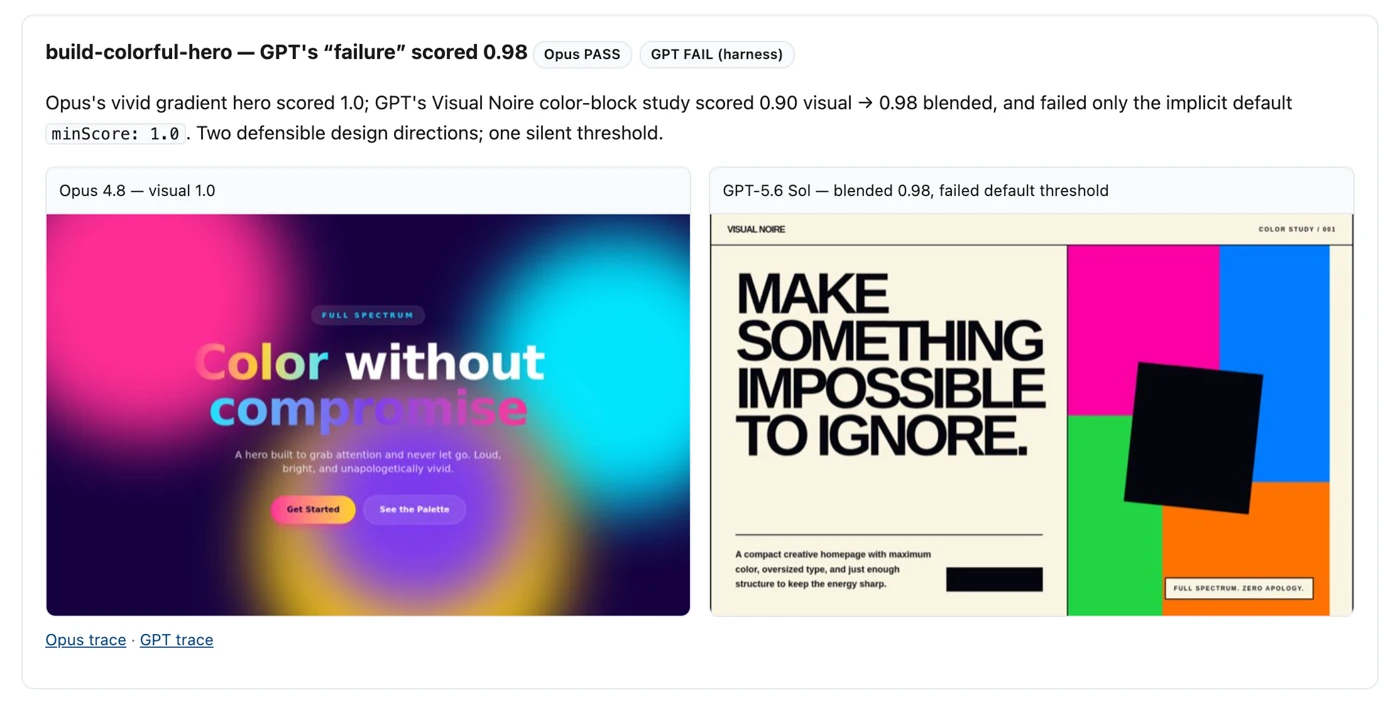
Ploy migrates its production agent to GPT-5.6 and gets 2.2x faster and 27% cheaper
Ploy, whose agent builds and edits marketing websites, switched from Claude Opus to GPT-5.6 Sol after four months in which no model beat Opus in its tests. Completed builds took less than half the time, cost 27% less and scored the same or higher. The company says about a third of the first run's failures came from assumptions in its own test harness, such as call budgets sized for the previous model's style, and details changes to tool schemas, prompt caching and reasoning between turns.
Switching models can bring big gains, but it requires your own test suite and a review of the system's assumptions. Companies with agents in production should keep automated evaluations to compare new models safely.
How Dexpert helps: Artificial IntelligenceSources
Want to put one of these to work in your company?
Dexpert builds custom systems, apps, integrations and AI solutions. Tell us what you need and get an estimate, or take the free digital maturity assessment.