
This week: an open model that closes in on closed ones, a new standard for query APIs and an infrastructure case that cut costs by two thirds.

GLM-5.2 becomes the top-rated open model and gets a 1 million token context
According to Artificial Analysis, Z.ai's GLM-5.2 now leads open-weight models on its intelligence index, with 51 points, ahead of MiniMax-M3 and DeepSeek V4 Pro. On GDPval-AA v2, which measures real agentic work, it scored in line with closed models such as GPT-5.5. The model keeps GLM-5.1's size, grows the context from 200K to 1 million tokens and costs $1.40 per million input tokens and $4.40 output.
The gap between open and closed models is shrinking, giving companies more choice and bargaining power. Architectures that make it easy to switch models help take advantage of these options.
How Dexpert helps: Artificial IntelligenceSources

IETF publishes the HTTP QUERY method, for repeatable queries with a body
RFC 10008, an IETF standard, defines the QUERY method in HTTP: a safe, idempotent request that carries the query description in its body, like a POST, but can be repeated or restarted without side effects. Today, queries too large to fit in a GET URL usually fall back to POST, which lacks those guarantees. The document notes that URLs have unpredictable size limits and tend to end up in logs and bookmarks.
APIs with complex filters, such as search and reporting, get a standard path that also makes caching and automatic retries easier. Consider QUERY when designing new APIs as libraries and proxies add support.
How Dexpert helps: Backend & APIsSources
- RFC Editor: RFC 10008: The HTTP QUERY Method
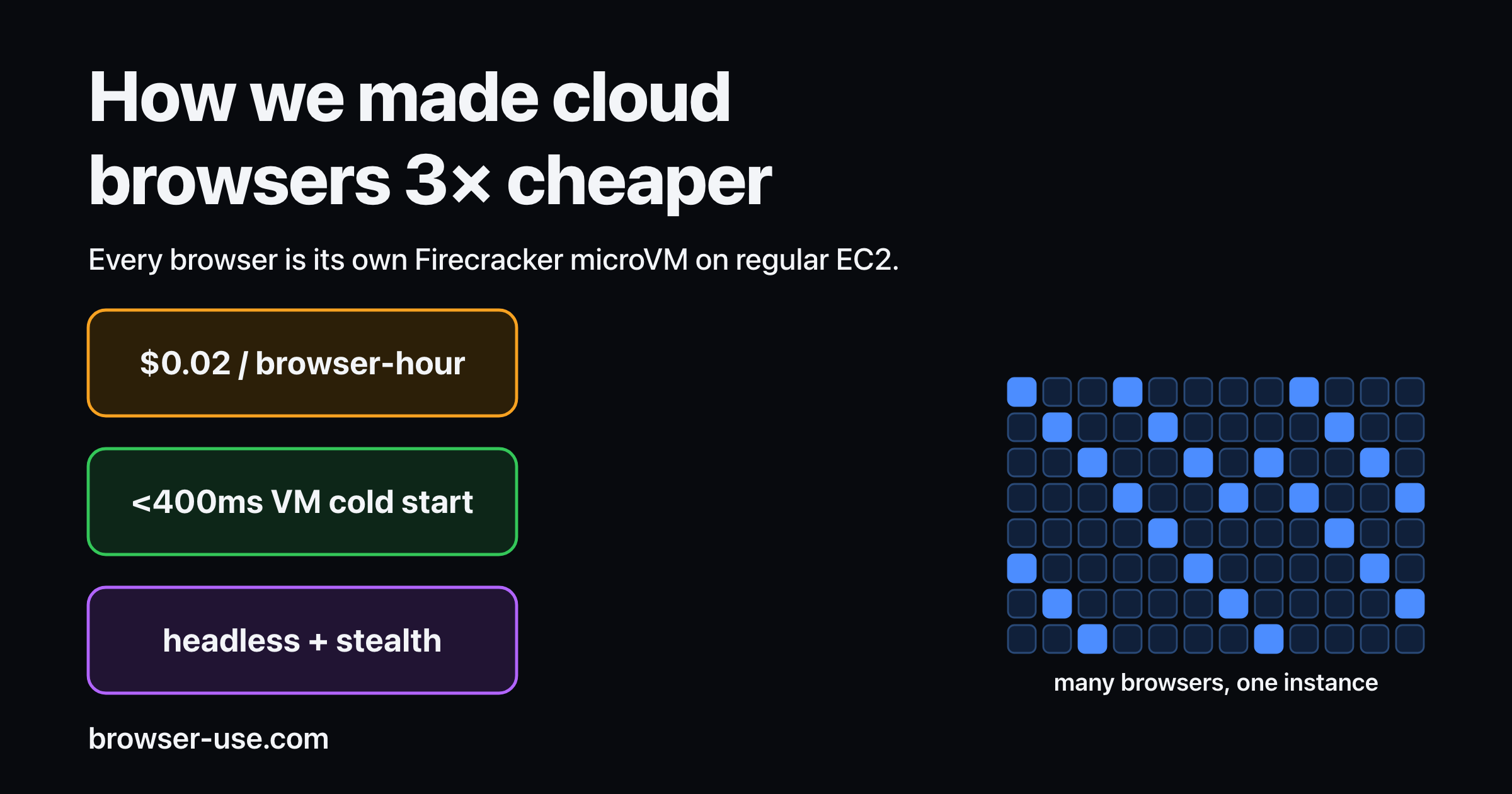
Browser Use runs Firecracker VMs inside EC2 and cuts browser costs to a third
Browser Use, which offers cloud browsers for agents, rebuilt its infrastructure to start each session in under a second, with cost falling from $0.06 to $0.02 per browser hour. Each session runs in its own Firecracker microVM, to isolate cookies, cache and customer sessions. The unusual part is running Firecracker on regular EC2 instances, not dedicated servers, and the post explains how the team worked around the cost of running VMs inside VMs.
The case shows that strong isolation does not have to be expensive when the architecture is well designed. Products that run customers' code or automations can draw on this model to balance security and margin.
How Dexpert helps: Cloud & ServerlessSources
- Browser Use: How We Made Cloud Browsers 3x Cheaper and Faster
Want to put one of these to work in your company?
Dexpert builds custom systems, apps, integrations and AI solutions. Tell us what you need and get an estimate, or take the free digital maturity assessment.