
This week, the year in databases as seen by Andy Pavlo, AI running on cheap hardware and a practical example of how reworking data structures saves resources.

PostgreSQL drew most of the database market's energy in 2025
In his yearly review, Carnegie Mellon professor Andy Pavlo says most of the industry's activity went into PostgreSQL companies and products. He cites Databricks buying Neon for about $1 billion, Snowflake buying CrunchyData for $250 million and Microsoft launching HorizonDB. PostgreSQL 18 brought asynchronous I/O and skip scans on multi-column B-tree indexes.
Choosing PostgreSQL for new systems remains a safe bet, with more and more managed options on the big clouds. Teams on older versions can plan an upgrade to get the performance gains of version 18.
How Dexpert helps: Backend & APIsSources
- Carnegie Mellon University: Databases in 2025: A Year in Review
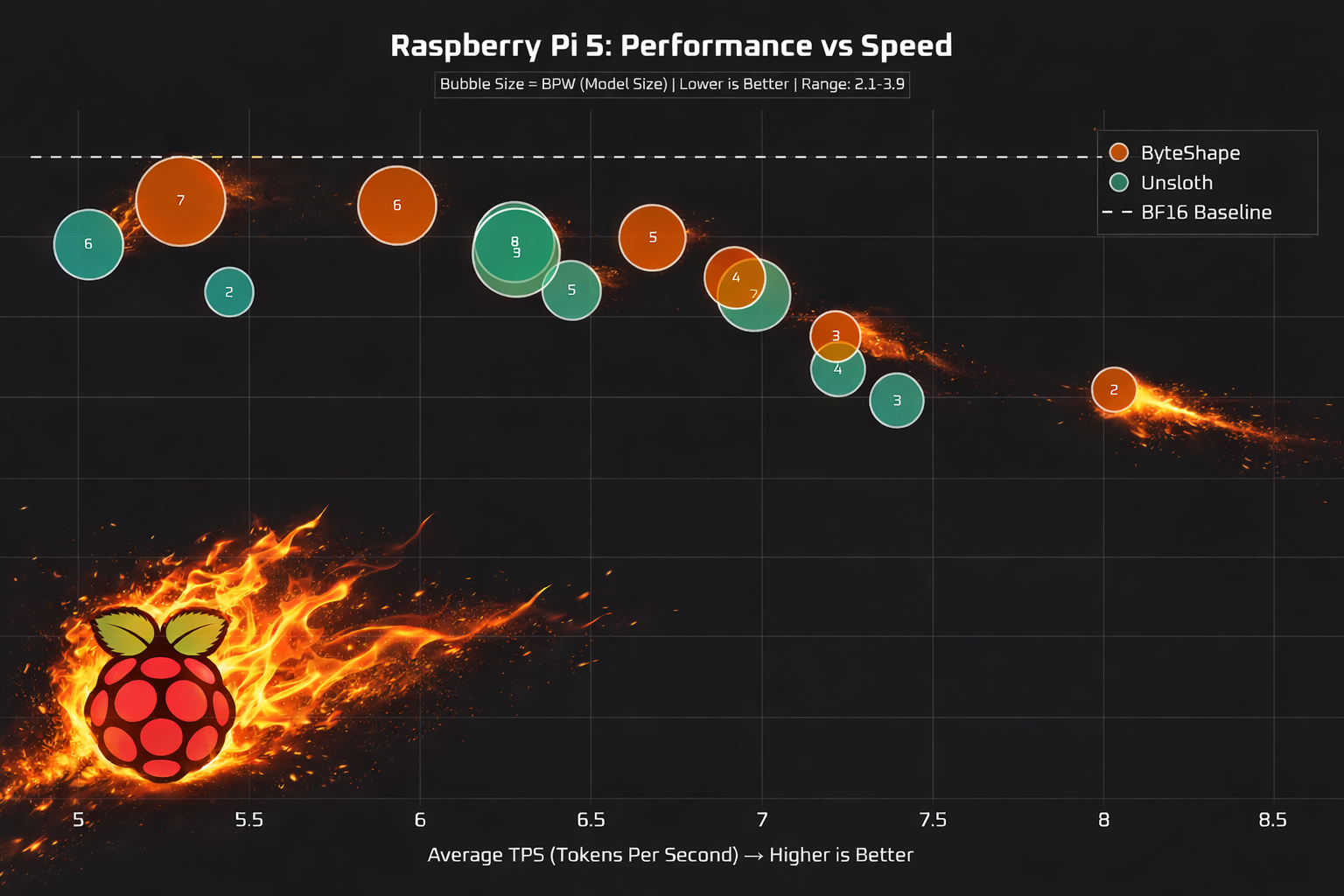
A 30-billion-parameter Qwen runs in real time on a Raspberry Pi 5
ByteShape showed the Qwen3-30B-A3B model running on a 16 GB Raspberry Pi 5 at about 8 tokens per second while keeping 94% of the original version's quality. The result comes from a method that picks the data type of each weight to balance speed and quality, instead of only shrinking the file. According to the company, about 8 tokens per second already feels real-time to someone reading the answer.
Capable models running on cheap hardware make room for AI in devices, kiosks and places without reliable internet, with no per-call API cost. It is worth considering for projects with connectivity or data privacy constraints.
How Dexpert helps: Artificial IntelligenceSources

Brave reworks its Rust adblock data structures and cuts memory by 75%
Brave overhauled its Rust-based ad blocking engine and cut its memory use by 75%, about 45 MB per browser on every platform. The main change was storing the roughly 100,000 default filters in FlatBuffers, a format read without copying, instead of heap-allocated structures. The team also made filter matching 13% faster and cut allocations by 19%.
The case shows that optimizing how data sits in memory can bring bigger gains than changing infrastructure, especially in mobile apps and on older hardware. Systems that load many rules or catalogs into memory are good candidates for this kind of review.
How Dexpert helps: Web DevelopmentWant to put one of these to work in your company?
Dexpert builds custom systems, apps, integrations and AI solutions. Tell us what you need and get an estimate, or take the free digital maturity assessment.